The headlines made it sound simple. Federal marijuana rescheduling was signed on April 23, 2026. Cannabis is no longer Schedule I. So banking should be open now, right?
It isn't. Not yet. And understanding why matters more for cannabis businesses than the rescheduling news itself.
What Rescheduling Actually Did (And Didn't Do)
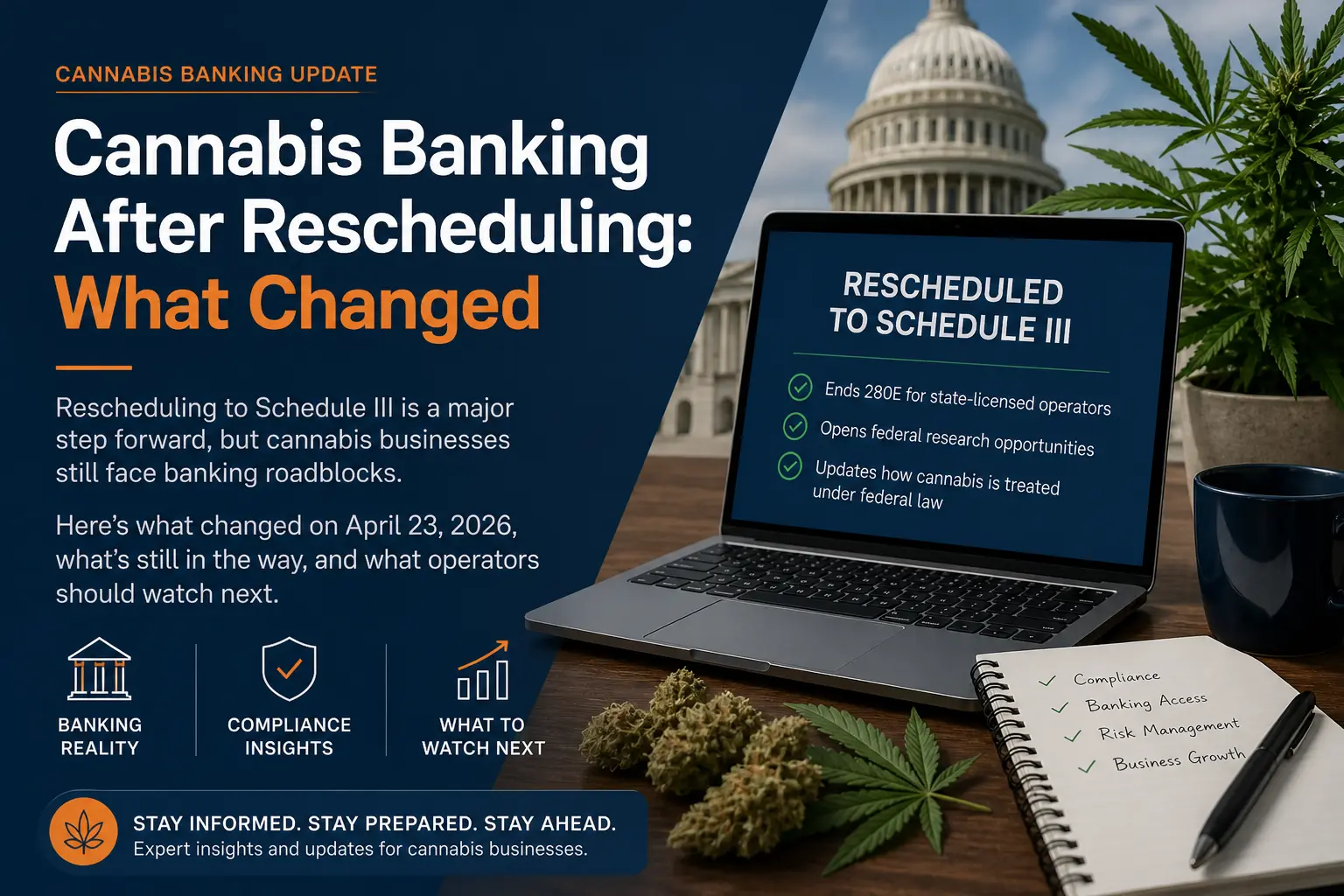
On April 23, Acting Attorney General Todd Blanche signed the order moving FDA-approved marijuana products and state-licensed medical marijuana to Schedule III of the Controlled Substances Act.
That's a meaningful policy shift. Because 280E applies only to Schedule I and II substances, state-licensed medical operators are no longer subject to its deduction restrictions. It also opens federal research and changes how cannabis is treated under controlled substance law.
What it didn't do is touch the federal banking framework that has kept most banks out of cannabis for the past decade.
Why Cannabis Banking Hasn't Opened Up
Banks aren't slow because they want to be. They're slow because the federal compliance machinery that governs cannabis banking hasn't moved with rescheduling.
FinCEN's 2014 Cannabis Guidance Is Still in Effect
The compliance framework banks use to handle cannabis customers comes from a 2014 FinCEN guidance document. It was written when cannabis was Schedule I, and it remains the active federal compliance standard today.
Until FinCEN issues updated guidance, banks have to follow the same Suspicious Activity Report (SAR) filing requirements and enhanced due diligence procedures they did before April 23. Rescheduling didn't override that.
The Bank Secrecy Act Still Applies
The Bank Secrecy Act, which governs how financial institutions handle cash-intensive and federally regulated businesses, applies to cannabis the same way it did before rescheduling. Schedule III status doesn't exempt cannabis transactions from BSA reporting or compliance obligations.
State-Licensed Cannabis Is Still Federally Regulated Commerce
Schedule III is still a controlled substance. State-licensed cannabis activity continues to involve federally regulated commerce, just at a different schedule. Banks don't operate on whether something is "more or less" federally illegal. They operate on whether their compliance officers and federal regulators have signed off on a clear path.
That path hasn't been published yet.
Banks Operate on Policy, Not Headlines
Even banks that are genuinely interested in entering the cannabis market need internal policy approvals, board sign-off, regulatory clarity, and updated compliance procedures. Those processes take months or years, not days. Most major banks are still in wait-and-see mode.
12 years. How long FinCEN's cannabis banking guidance has been in effect. Schedule III didn't change it.
What Has Actually Changed Since April 23
The story isn't that nothing is moving. Plenty is. Just not at the federal banking level.
Capital Is Returning to Cannabis
Investor interest, M&A activity, and IPO conversations have all picked up since the late-2025 executive order, and rescheduling has accelerated that momentum. The capital markets are responding faster than the banking system.
Processor and Partner Appetite Has Expanded
Payment processors, fintech partners, and adjacent service providers are leaning into cannabis more aggressively. Companies that were on the sidelines a year ago are now actively building cannabis offerings or expanding existing ones.
Industry Perception Is Shifting
The reputational risk of working with cannabis businesses has dropped meaningfully. That matters for hiring, vendor relationships, M&A diligence, and long-term planning. It's a different operating environment than it was even a year ago.
What Cannabis Businesses Should Do Now
Waiting for federal banks to open the door is not a strategy. The gap between Schedule III on paper and a fully banked cannabis industry will be measured in years, not months. Here's what to do in the meantime.
Work With Cannabis-Experienced Financial Partners
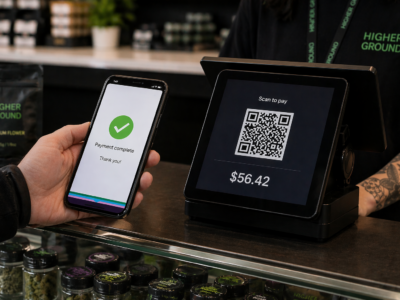
Cannabis businesses don't have to wait for traditional banks. Paybotic Financial works with Regent Bank, Member FDIC*, to deliver banking services purpose-built for cannabis operators. Deposit accounts, ACH, and Pay by Bank already run cleanly through cannabis-aware compliance frameworks built for this exact moment.
For more on payment infrastructure for cannabis operators, see the Cannabis Payment Guide.
Build Financial Operations Ready to Scale
If your business is going to grow into the post-rescheduling environment, your financial systems need to be ready for it. Clean deposit accounts, defensible compliance documentation, mature AP/AR processes, and reliable payment collection are all easier to put in place now than to retrofit when investors or acquirers come knocking.
Mature financial operations also reduce the friction of ongoing compliance as the regulatory landscape evolves.
Watch the Regulatory Calendar
FinCEN, the OCC, and other federal regulators will eventually update their cannabis guidance. The timing is uncertain, but the direction is clear. Cannabis businesses that have established financial infrastructure now will be best positioned when broader access opens up. Those waiting on the sidelines will be at the back of the line.
Move Now. Don't Wait.
Rescheduling was historic. It changed the legal status of cannabis at the federal level for the first time in over 50 years. But it didn't flip a switch on banking access, and treating it like it did is a costly mistake.
What rescheduling did do is signal where the industry is headed. Cannabis businesses that move now will be ahead of competitors still waiting for federal banks to catch up. The companies that build serious financial infrastructure today are the ones positioned to win as the rest of the system slowly rebuilds around the new reality.